Increasing multi-device engagement through enabling continuation of gameplay across devices.
Experience Gap
Multi-device experience felt disconnected and resuming games across devices was difficult.
Players use their “MRU”, (Most recently used list) on home to jump back into their most recently played games. However, MRU only showed locally installed/played games, so it was difficult playing across devices or continuing to play on another device.
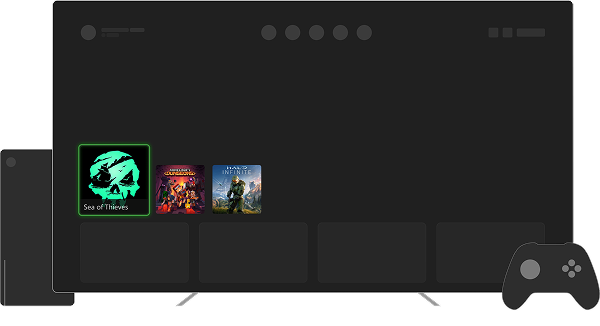
Player plays Sea of Thieves, Minecraft and Halo on their console
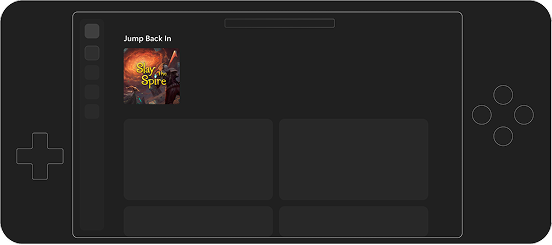
They only see Slay the Spire, a game they play on their handheld
Business Goal
Increase off-console hours and encourage multi-device play.
Ensuring that players can resume gameplay easily and seamlessly across their devices is critical to the Xbox vision; supporting play anywhere and everywhere, and increasing the Xbox player base outside of console.
Hypothesis
By making it easier to resume games across devices, we will increase multi-device engagement and play!
DESIGN PROCESS
Why don’t we make everything sync on every device?
It seemed straightforward. If we wanted to make sure players can always jump back into what they were playing across every device, we can simply just show everything they’re doing on every device.
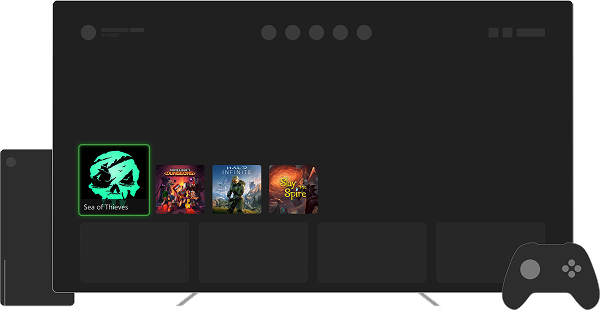
Player can see everything they play across all devices on console
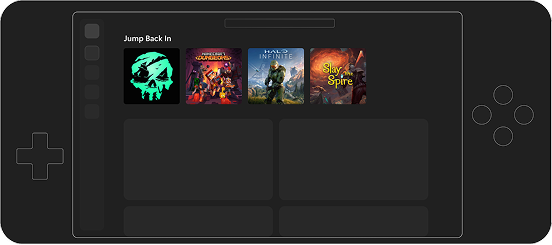
And everything on their handheld
User research learnings
Players play different games depending on the device type.
There are a lot that goes into how players determine what to play on where, so showing everything everywhere doesn’t make sense, especially if it means slowing down the player from jumping back into what they were playing locally.
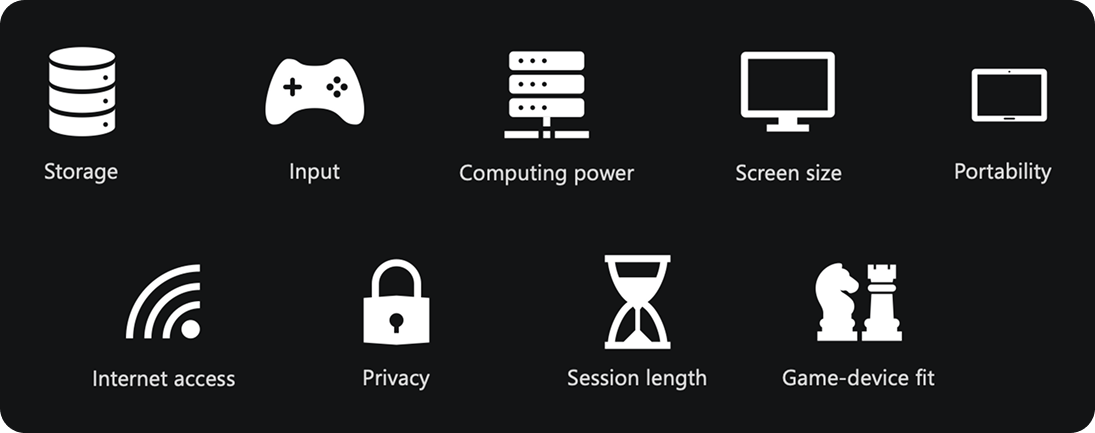
“I would want to keep chill games on the handheld... Then on my console, heavier performance games, the bigger games.” – UR Participant #2

User testing
We validated our hypothesis with user testing mid-fidelity designs.
We started with asking how multi-device players play games across today, then showed mid-fi screens illustrating how locally played games are separated from games you play on other devices to players without explanation.
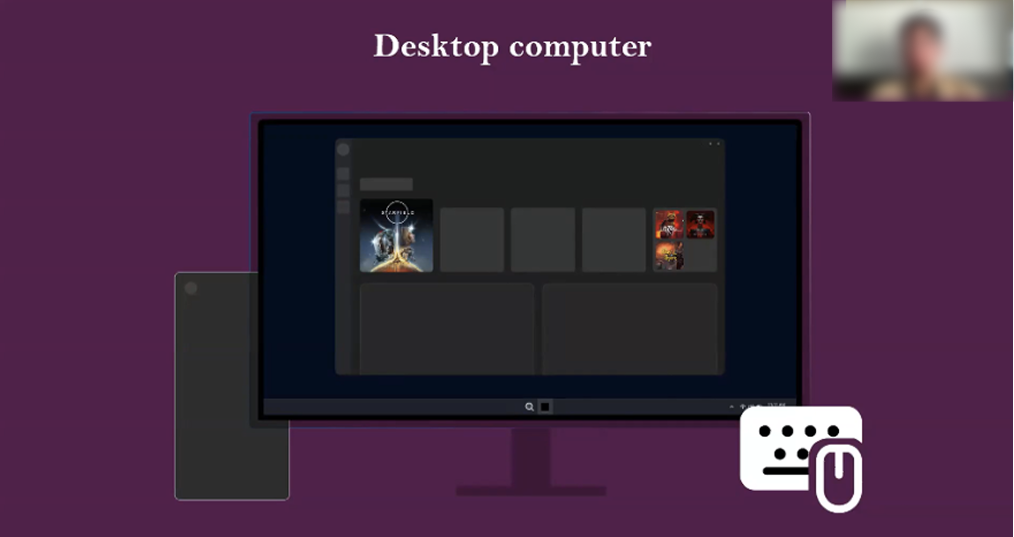
UR learnings 1
Mult-device players prioritize local device games
UR learnings 2
Players understood the 4-pack without explanation
Final Product
Design
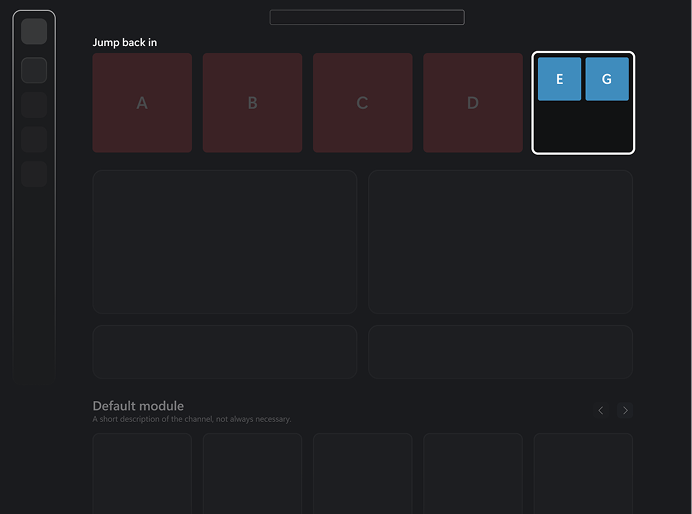
Ecosystem Tile + Play History
At the end of the MRU, the new 4-pack Ecosystem tile becomes the player’s play history with games they’ve played across any device. (Each letter represent a game)
Playing a game on one device
When you install and play a new game on one device, the game shows up in other device’s ecosystem tile.
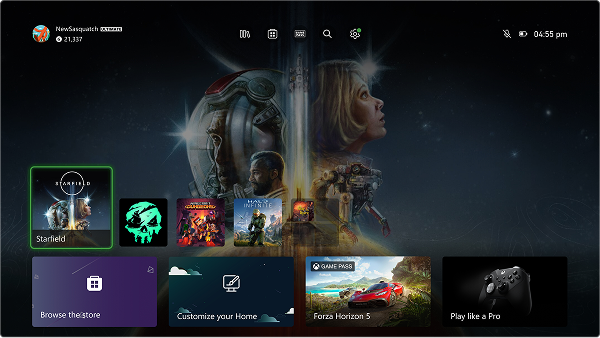
I install and play Starfield on my console
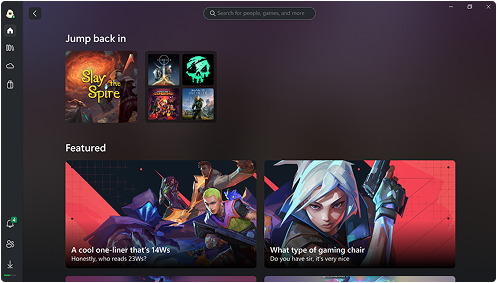
I see that Starfield appears on my handheld’s Ecosystem Tile
Playing a game on both devices
When you play the game on the second device, the game will leave the device’s ecosystem tile and become a part of that device’s core MRU.
I install and play Starfield on my console
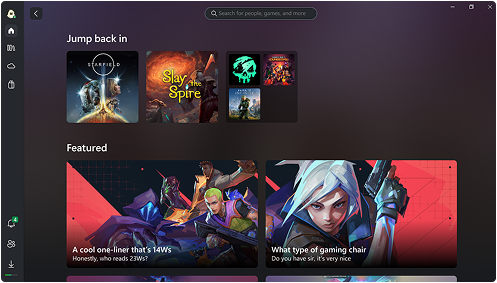
I play Starfield on my handheld, so now its a part of my core MRU
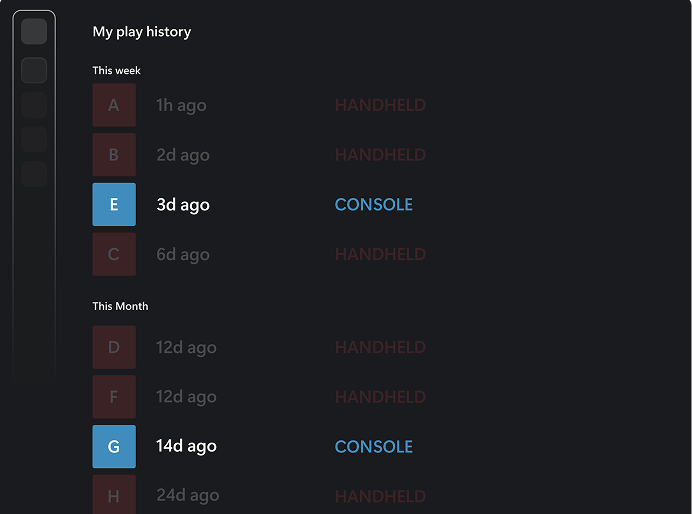
Play history page
The ecosystem tile takes the player to the full play history page inside your library, where you can see all the games you play across devices in chronological order.
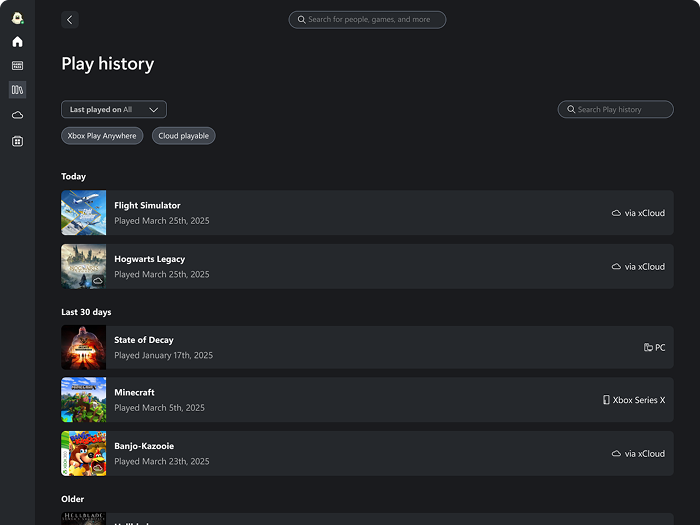
Impact and Results
We saw an increase in multi-device play, overall play hours, and positive customer sentiment.
Through the successful launch of this work, we saw that console players were engaging more with PC and PC players were engaging more with cloud. We saw a rise in Game Pass subscription engagement off-console, with more acquisitions and conversions to the ultimate upgrades.
Opportunity for single-device players.
Although the feature was welcomed by most multi-device players, our single-device console players were vocal about wanting their home experience to be 'heroic'. We have already started addressing customization features that can hide the ecosystem tile for players who may not need it, and more.
Reflection
Balancing business and player needs is how we deliver real impact.
I was glad that while we had a clear business objective, we still focused on the player goal. We took the time to understand our player sentiment before rushing to a solution, and that was how we were able to deliver an experience that truly meet the needs of our player while also delivering the impact our business needed.
Storytelling and aligning stakeholders is sometimes harder than the pixel.
The actual “ecosystem tile” design was not difficult or controversial for the most part. What was the majority of this project was putting the pieces together and telling a compelling story to different stakeholders to align everyone on the same player need and goal. I led this work as the design AND product lead at first, defining our business goal with our player need. As I refined it with the help of my PMs, User researchers, Architects and Engineers, we were able to ship our first successful multi-device experience.