Teaching people about endangered corals through an interactive experience in VR.
Problem
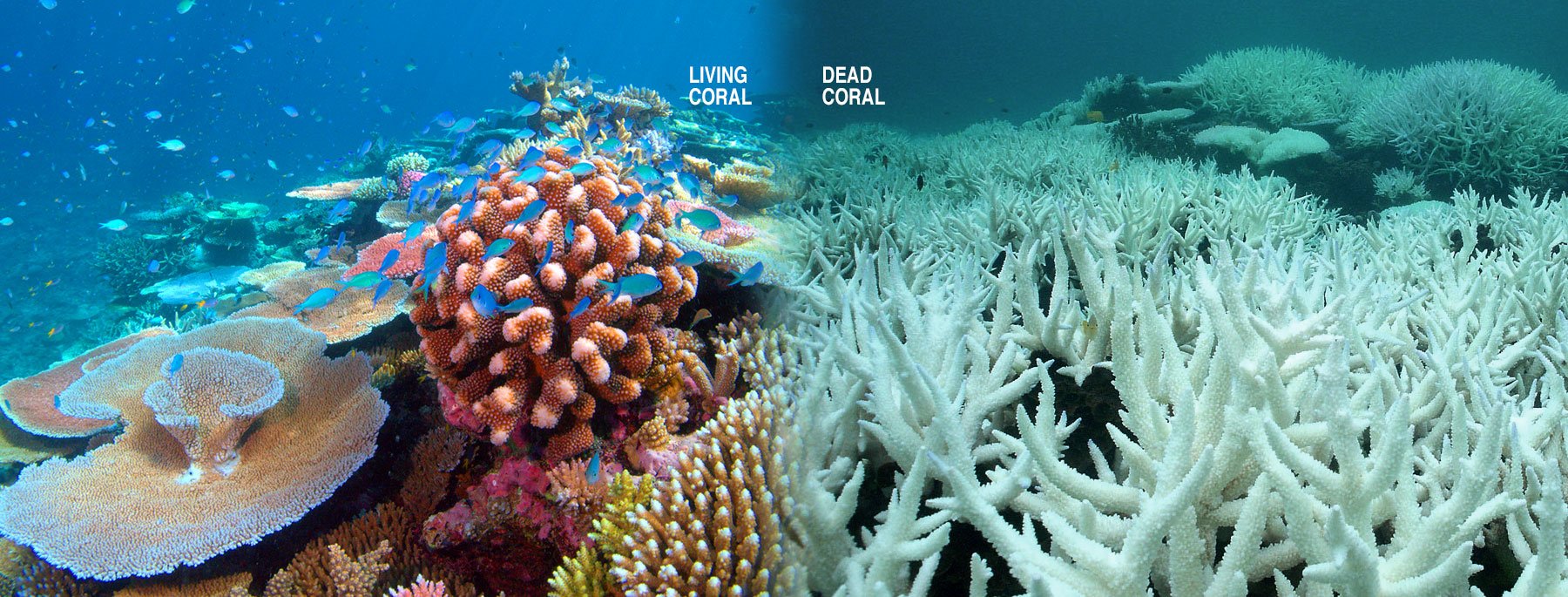
Corals are dying but people don't know much about it.
In order to get people to realize how the most diverse systems in the world is in dire need of help, people need to develop a connection with corals.
Research
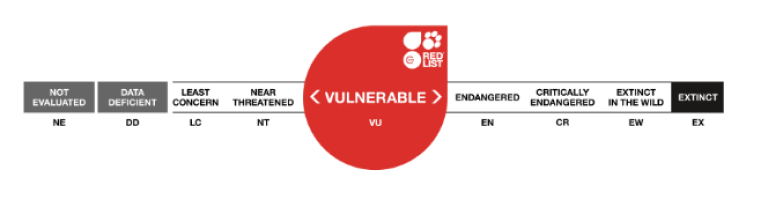
The IUCN Red List of Threatened Species
Through my research, I have decided to show the endanger level and current population trend of different species of corals because it can provide information why corals need help.
While the endanger level can provide information on how much a specific species of corals need help, the population trend can provide insights into how the coral species is currently doing.

Hypothesis
An educational interactive experience will inspire people to care more about corals.
I personally saw corals while I went snorkeling in Taiwan and that's when I became more curious about them. I wondered, if people were able to see corals and engage with them, would they also feel more inclined to care about them?
Process: Prototype 1
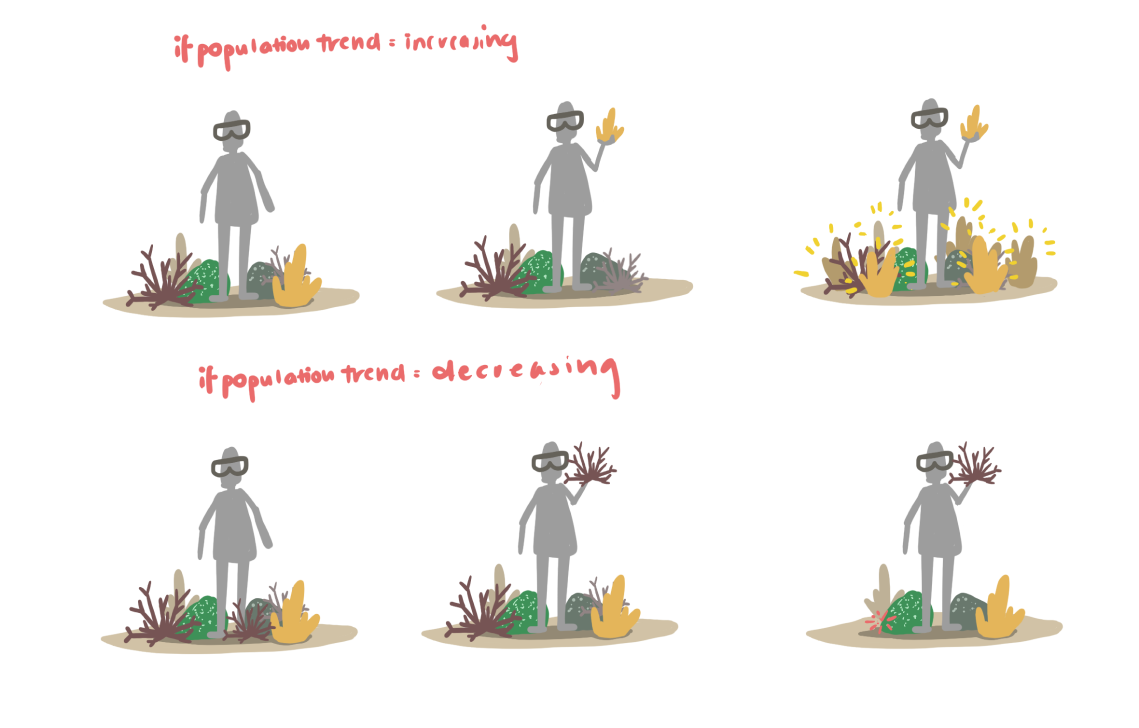
Showing endanger level and population trend with particles.
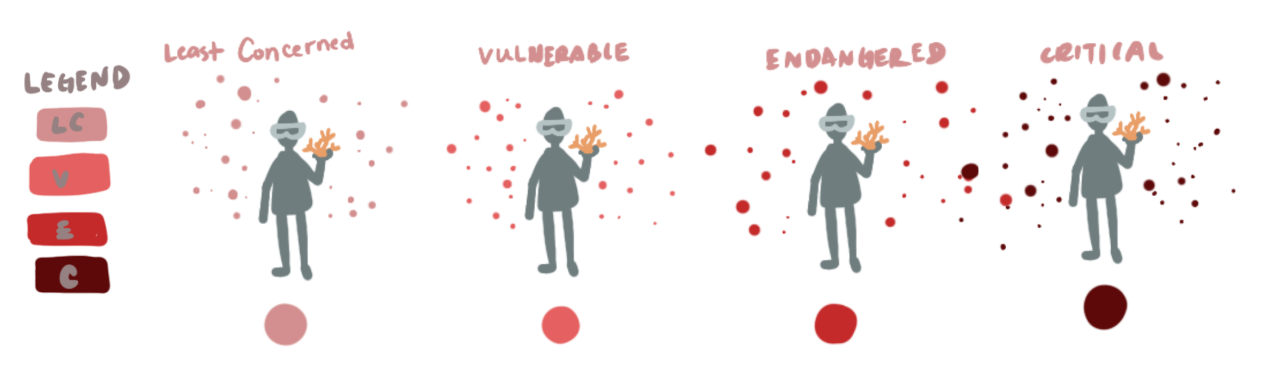
In the first prototype, I focused on showing the endanger level & population trend with colour-coded particles and spawning/despawning corals. The first prototype also included testing rendering and colours on 3D assets in Unity.
Endanger level
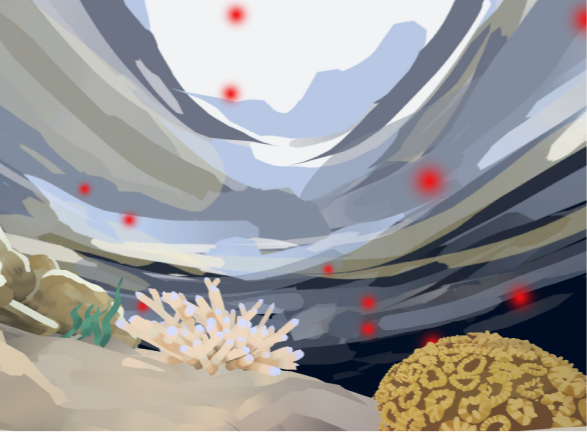
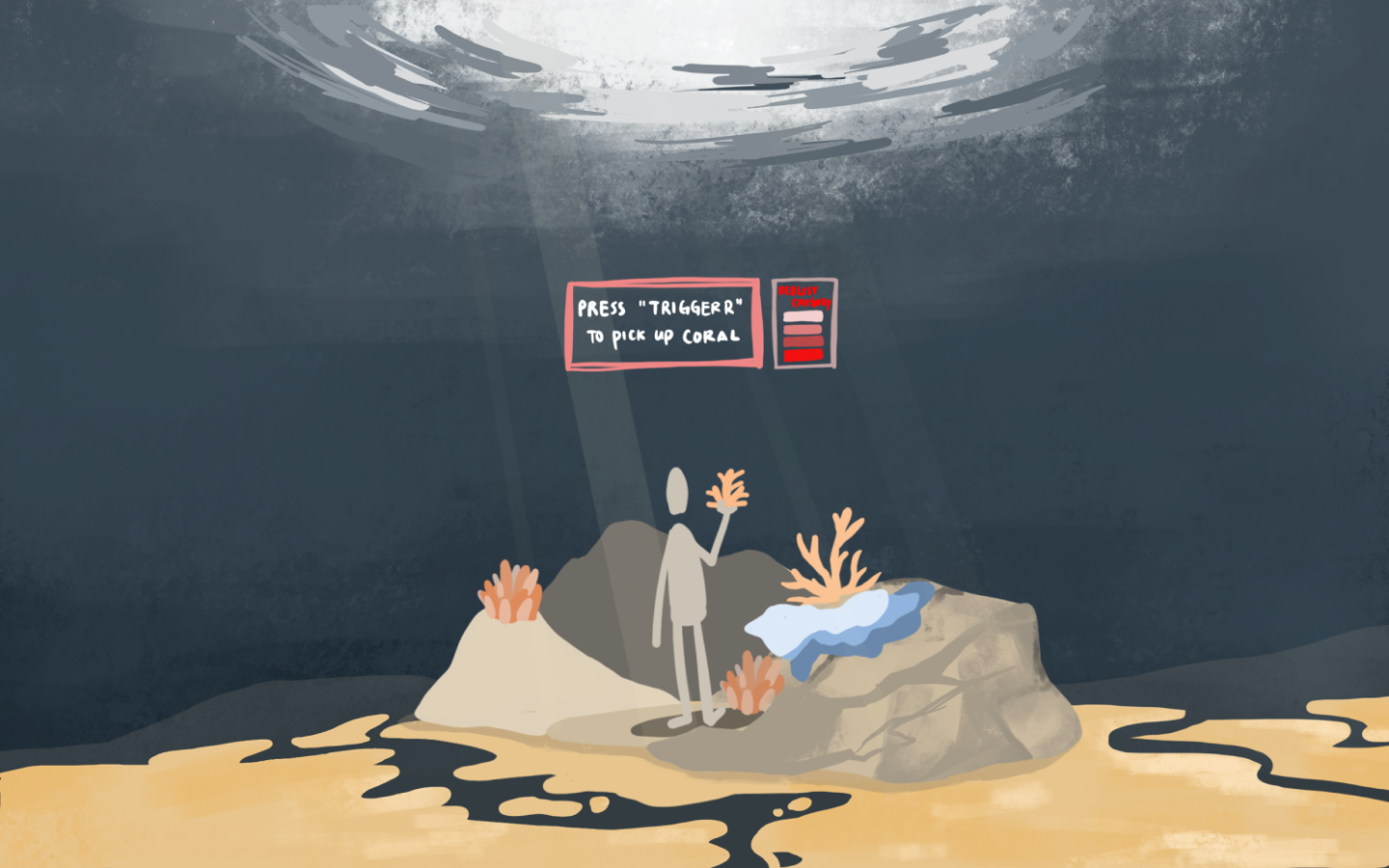
When a user pick up a coral, colour coded particles would appear around the user. These colours correspond to a UI, which was meant to indicate the endanger level.
Population Trend
When a user pick up a coral, corals of the same species would either spawn or despawn depend on if the population trend of that coral species is increasing or decreasing.
User testing and learnings
The IUCN Red List of Threatened Species
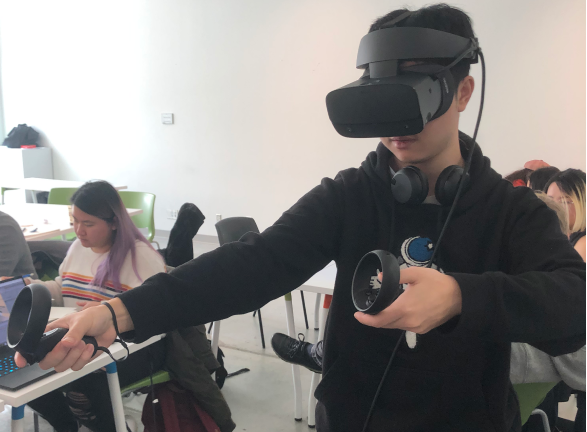
After creating my first prototype, I went into user testing. Creating a VR prototype in Unity was difficult, but it was very worth it as it brought very important insights into the UX of CoralVR.
1. Instructions were unclear
Users were confused about how to use the VR controllers. Verbal instructions and physical guiding was needed.
2. Confused about the particles
Users were confused about how to use the VR controllers. Verbal instructions and physical guiding was needed.
3. Didn't notice spawning/despawning corals.
They did not notice the corals around them appearing and disappearing to indicate population trends.
4. User tests in VR
All of the things that I thought was going to work didn’t, and I honestly wouldn’t have known until I tested it with a working prototype in VR.
Process: Prototype 2
Simplifying interactions based on UR results
After user testing my first prototype, I knew I had to make big changes. I quickly went back to exploring what type of data to include on paper before creating my second prototype.
Exploration: Other Data
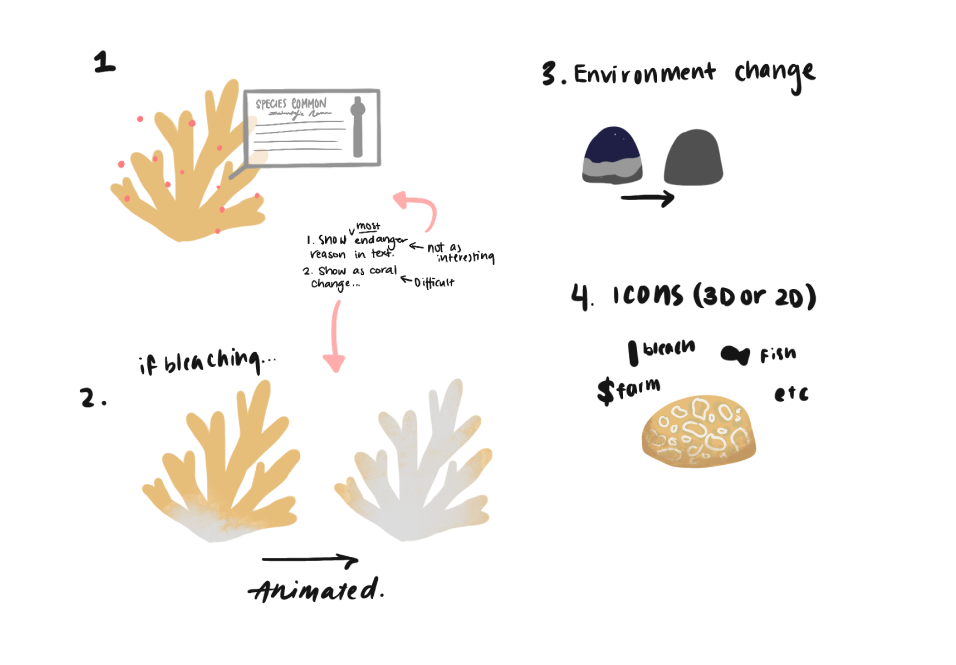
From my user tests and feedback, I decided to explore more straightforward ways of representing information. I wanted to try using a pop-up that is attached to the corals to show the endanger level and name of the coral species.
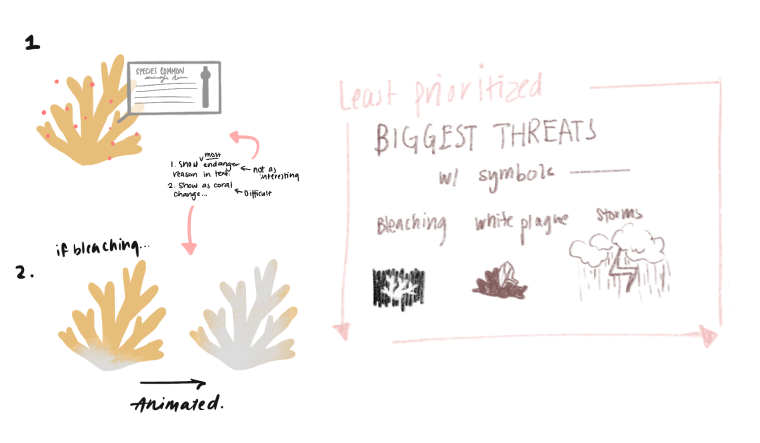
I also explored different ways of showing information such as contributing factors to the decline of certain species. Although I didn't have enough time to explore this, I think using simple animations to show the process corals go through if they experience temperature rising would be very fascinating & informative.
Species Name & Endanger Level
For the endanger level and species name, I decided to use a simple pop-up in the end. This was a straightforward and clear way of providing information to the user.
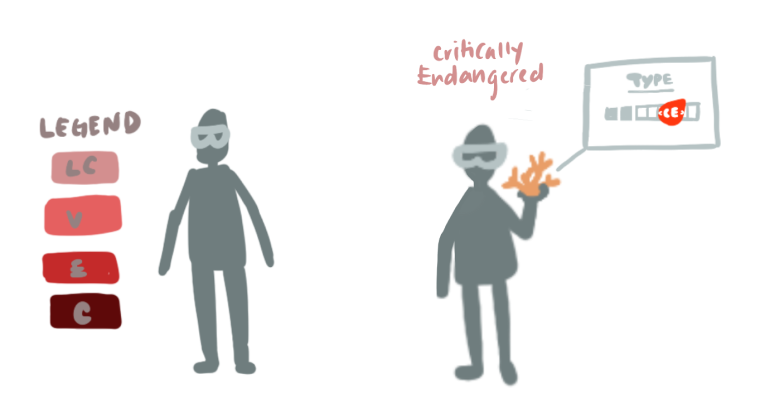
+ Animations
From the feedback, users mentioned having simple animations such as the particles made it felt more realistic. I decided to condense the particle system to wrap around the coral the user pick up, and use the colour-coding system to correspond to the UI in the pop-up.
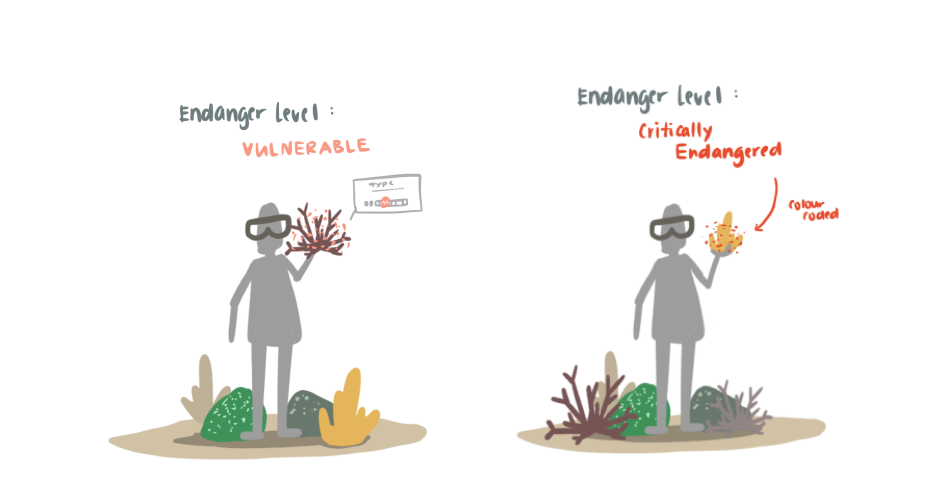
Visual design breakdown
Understanding Corals - Colours & Shapes
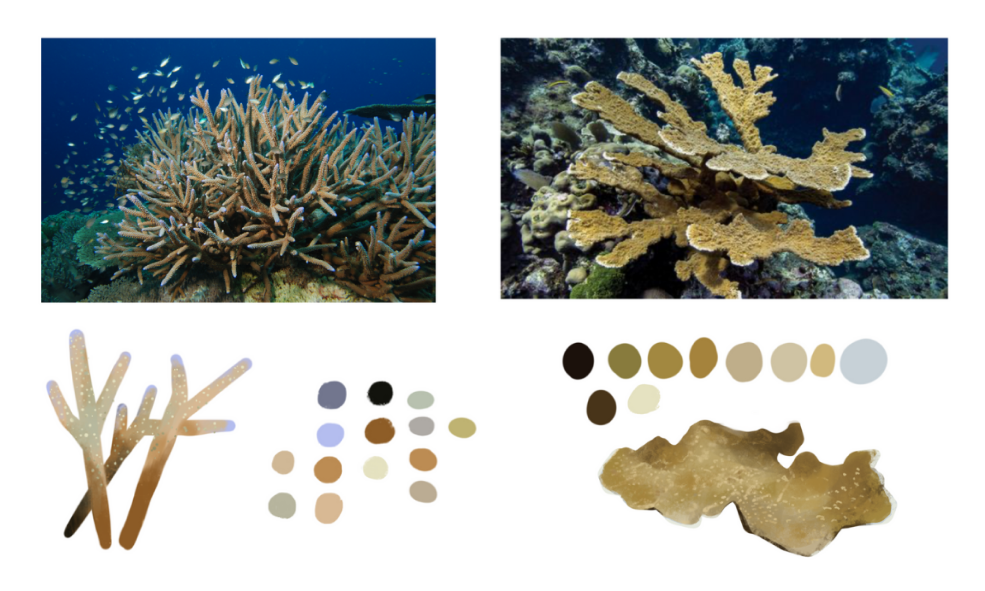
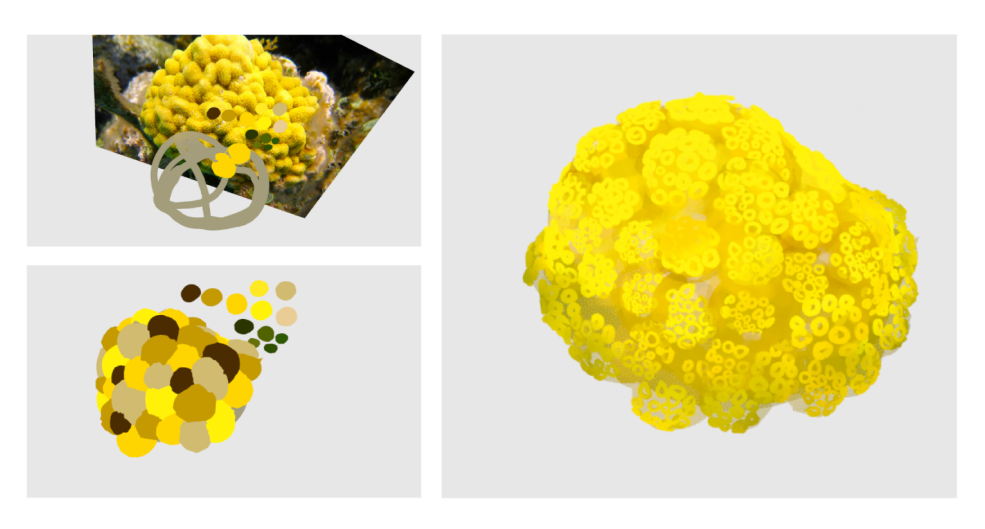
Before I started working my colour palette and environment design, I went through each of the corals in my list and did a short digital painting session on them so I could understand their colour and shape. This helped me figure out the shape and colour palette, and made 3D modelling/painting in QuillVR much easier.
Environment Design
Creating an underwater environment was really difficult. After researching how people paint an underwater effect digital painting, I tried it myself. Then, I took this painting into VRQuill and painted a 3D environment based on the colours and style in this painting.
Takeaways
Adding more Interactions
I want to add more functions such as the map and indication of the different types of threats for the coral. I would like to continue with trying out the different ideas that I have planned, and user testing them.
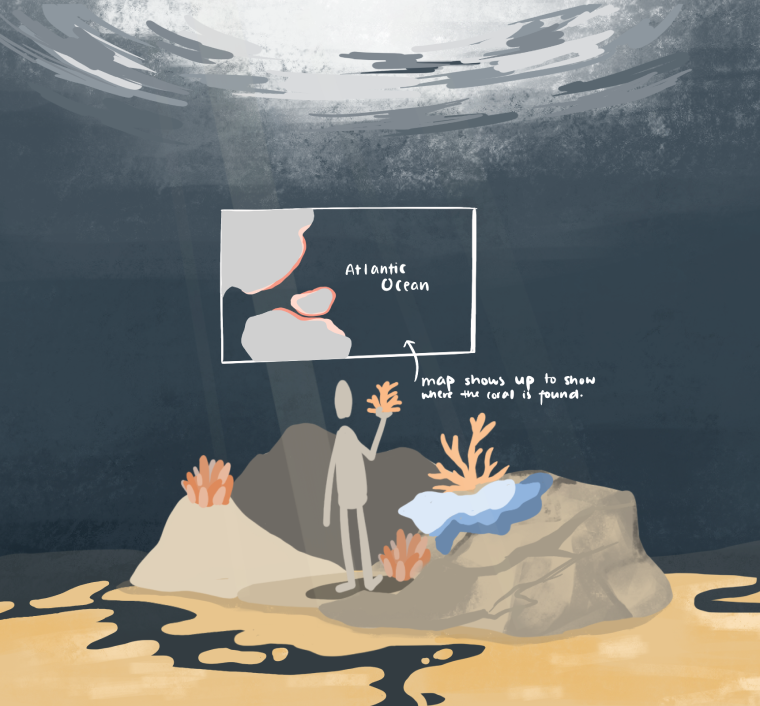
As a gamer, I know from my experience how a map can provide a lot of context to the user. On top of giving the user context, I wonder how user interface elements in VR may confuse the user. Or, would it add to the overall user experience in a positive way?
I'm excited to test out more UI elements, and hope showing more information about the corals for the user will increase the learning aspect of the experience.
Reasons of Extinction/Endangerment
Through user-testing, some of my users mentioned they want to see more information. Through looking at the database within IUCN, they provided information such as location, endanger level, and the reason of endangerment. Showing these animations as players interact with the different species would bring another level of information.
Designing Virtual Reality Experiences
Designing an interaction in VR is something I have never done before, and learning Unity took a lot of my time. Watching the user interacting with the prototype is humbling and exciting, and how much I learned to be fearless and how to push myself as a designer is the biggest takeaway of this project.
Final Thought
Throughout the 3 weeks, I learned a lot about the tools that I was using. I was able to try Unity VR, which was difficult and had limited resources. I was really happy I ended up building a prototype that showed off my ideas, even if I still had a lot of other functions that I want to test. I learned that a project can last a long time, and user testing different types of interaction with this project will not only improve this specific project, but add to my knowledge of human centered design. I'm really excited to keep creating interactive experiences, especially in VR.
Thanks for reading!
Check out my next project here: